

If you’re selling a Woodland Hills home with solar panels, does it matter whether you own or lease them?
Yes, and the difference is significant. Owned solar panels transfer with your home and can add measurable value, while leased panels require third-party approval, buyer credit checks, and extra time that can delay or derail your closing.
Why This Matters Right Now in Woodland Hills
If you live anywhere between Ventura Boulevard and Mulholland Drive, you already know what July and August electric bills look like in the western San Fernando Valley. Solar panels are everywhere in Woodland Hills, and for good reason. But when it comes time to sell, the ownership structure of your system changes the entire transaction.
As of August 2026, the median sold price in Woodland Hills is $1,201,100 across 526 tracked closings, according to Resideline. Homes in ZIP 91367 are closing at 98.7% of list price and sitting for a median of 47 days, per CRMLS data for the three months ending June 2026. In a market where pricing strategy is everything, your solar setup can either be a genuine selling advantage or a complication that narrows your buyer pool. With 6 years of experience helping sellers across the San Fernando Valley and 40 closed transactions, what I tell my clients is this: figure out your solar situation before you ever take a listing photo.
How Owned Solar Panels Help You Sell in Woodland Hills
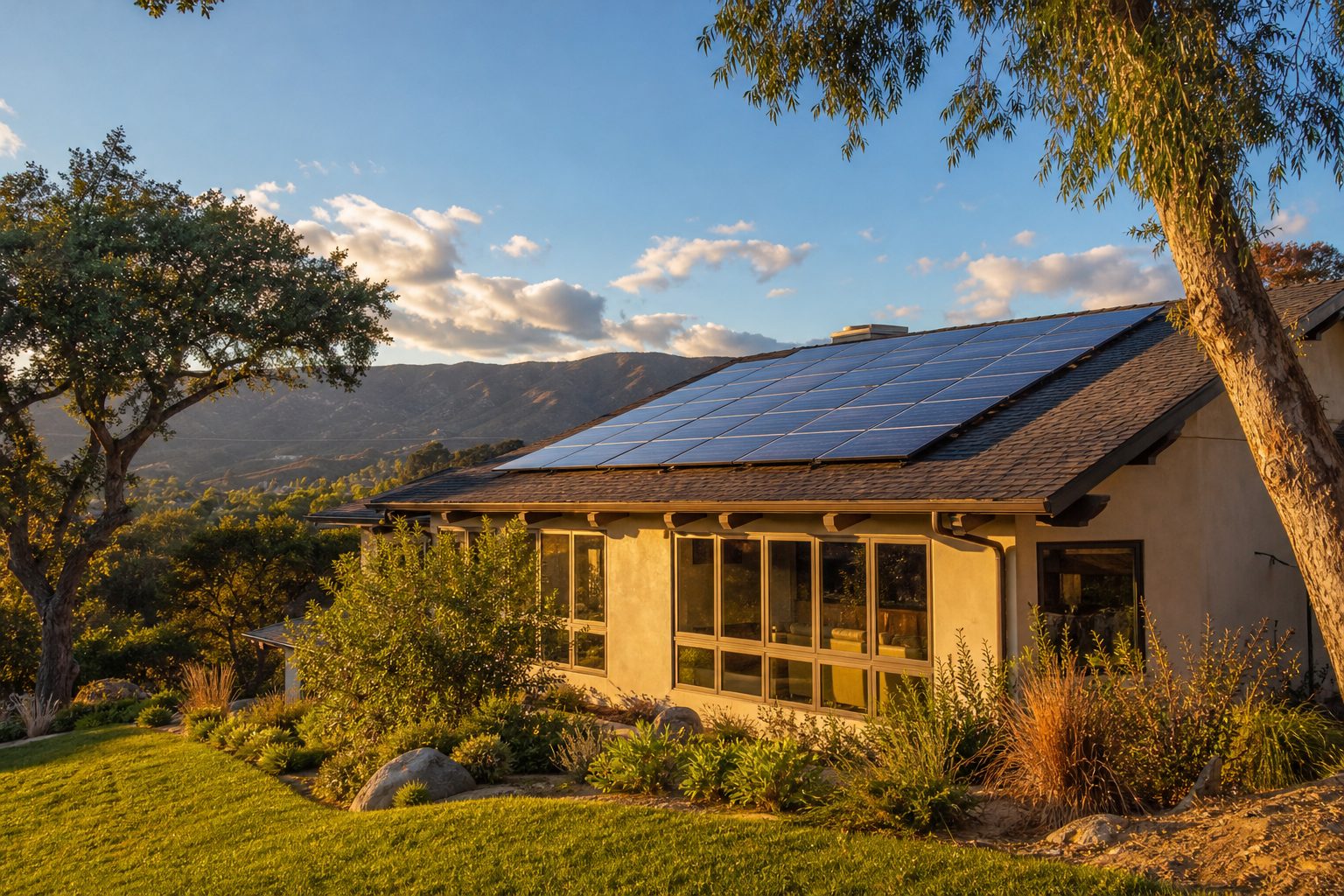
When your solar panels are fully paid off, they transfer with the home as a fixture, just like your HVAC system or built-in appliances. No third-party approval is needed. No credit check for the buyer. The panels simply convey with the property.
Here is where it gets meaningful for your bottom line. Research from the U.S. Department of Energy’s Lawrence Berkeley National Laboratory found that buyers consistently pay more for homes with owned solar photovoltaic systems, approximately $4 per watt of installed capacity. For a typical 8 kW system common in Woodland Hills homes (especially those larger ranch-style and hillside properties off Dumetz Road or in the gated communities near Topanga Canyon Boulevard), that translates to roughly $32,000 in added value. In a market where the median home sits around $1.2 million, that is a meaningful premium.
What Makes Owned Solar Easy to Market
You can position owned solar as a concrete monthly savings feature, which is especially compelling given Southern California Edison’s tiered rate structure. Buyers touring homes near Oxnard and Shoup or in the flatlands south of Ventura Boulevard are going to ask about utility costs. When you can hand them recent electric bills showing minimal monthly charges, that is a powerful conversation.
What I always recommend is that you gather your system documentation early: warranty information, production data, installer details, system size, and install date. Having this ready before your first showing signals professionalism and makes the transaction smoother for everyone.
NEM 2.0 Grandfathering: A Hidden Advantage
If your Woodland Hills system was installed and interconnected under NEM 2.0 (before April 2023), it is grandfathered for 20 years from the interconnection date. That means your buyer inherits the more favorable net metering rate, which is significantly better than what new NEM 3.0 installations receive. This is a real selling point that should appear in your marketing materials, and one that many agents overlook.
The Challenges of Selling With a Leased Solar System in Woodland Hills
Leased solar panels and power purchase agreements (PPAs) are a different situation entirely, and I want to be direct about this because it catches sellers off guard.
A solar lease means you pay a fixed monthly amount (typically ranging from $100 to $250 per month) for use of the system, while a PPA means you pay per kilowatt-hour generated (typically $0.10 to $0.18 per kWh). In either case, you do not own the panels. A third-party company does.
When you sell, the buyer has to assume that lease or PPA. The solar company requires written approval for the transfer, and the buyer usually has to pass a credit check, often around a 650 to 680 score. Some lenders will also count the lease payment against the buyer’s debt-to-income ratio, which can reduce their purchasing power.
Here is the part that concerns me most from a transaction standpoint: solar companies are notorious for dragging their feet on transfer paperwork. This can add 2 to 4 weeks to your closing timeline. In my experience, having all solar information ready to go from the beginning will make the transaction go a little smoother, since solar companies almost always delay closing due to lack of urgency.
How Leased Solar Affects Your Woodland Hills Home Value
Appraisers generally do not assign additional value to leased solar systems. The lease is treated as a personal property obligation, not a real property improvement. So while owned panels can add roughly $32,000 to an 8 kW system’s appraised value, leased panels typically contribute zero. This matters because it directly impacts the buyer’s loan amount and your negotiating position.
Your Pre-Listing Solar Checklist for Woodland Hills Sellers
Before you list, gather every piece of documentation related to your solar system. This is non-negotiable regardless of whether you own or lease.
- Solar contract or agreement (purchase receipt, loan documents, lease, or PPA)
- Monthly payment amount (if financed or leased)
- System size (in kilowatts)
- Installation date and installer name
- Recent electric bills (at least 12 months, showing seasonal usage)
- Warranty details and transferability terms
- NEM interconnection date (to confirm NEM 2.0 or 3.0 status)
- Production data (annual kilowatt-hours generated)
California law requires full disclosure of any solar lease or PPA encumbering the property. The California Association of REALTORS® provides specific solar disclosure forms, and your Seller Property Questionnaire (SPQ) includes solar-related questions. Skipping this step is not an option.
Lease Buyout vs. Lease Transfer: What Makes Sense for Your Sale
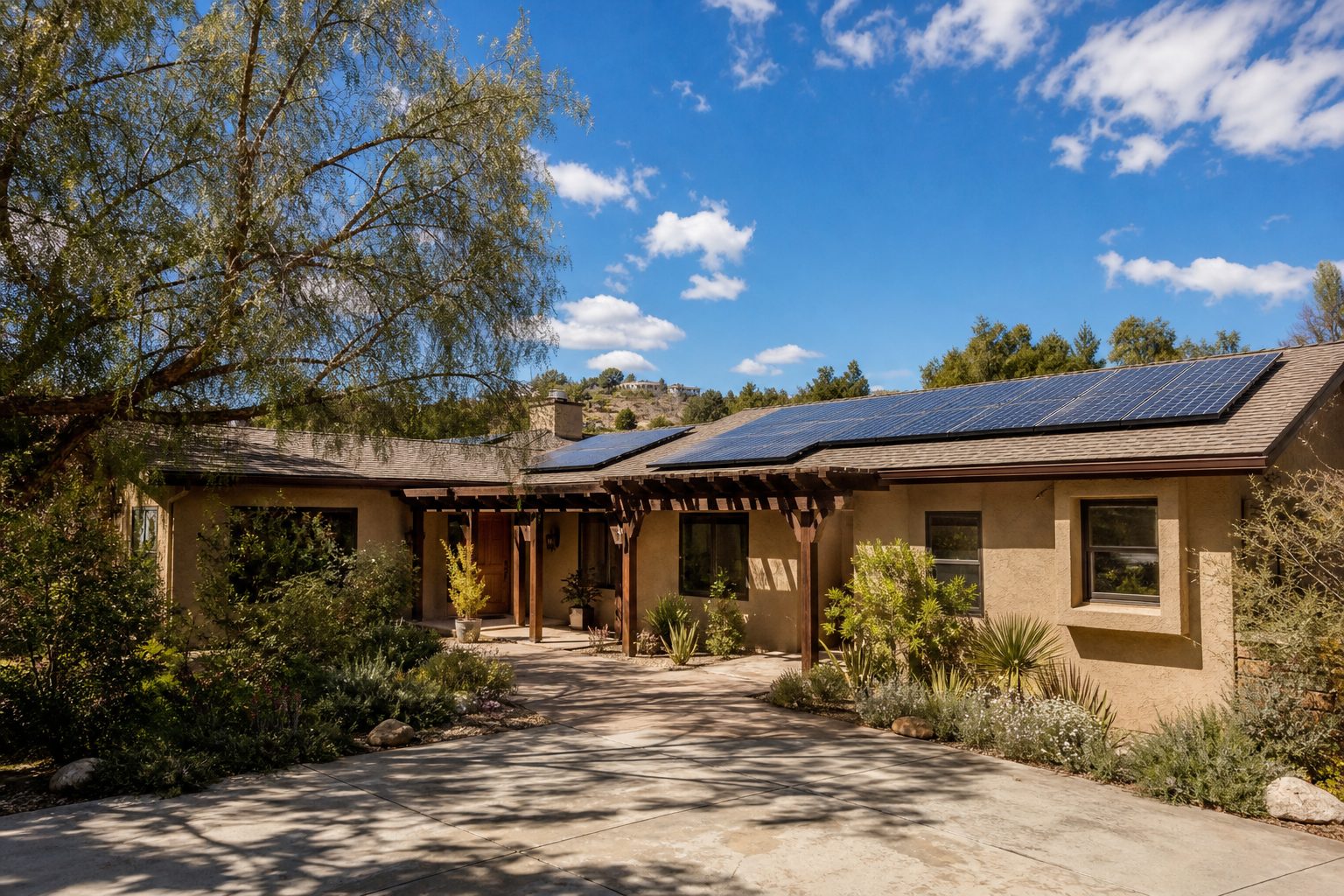
If you have leased panels, you have three realistic options, and the right choice depends on your financial situation and timeline.
Option 1: Transfer the lease to the buyer. This requires the solar company’s approval and the buyer’s credit qualification. Start the transfer paperwork as early as possible. I cannot stress this enough: do not wait until you are in escrow. Begin the process before you list.
Option 2: Buy out the remaining lease before listing. Typical buyout costs range from $10,000 to $25,000, depending on the remaining term and system size. Once you buy out the lease, the panels become owned, and you eliminate every piece of buyer friction associated with the lease. This can be a smart investment if it widens your buyer pool and lets you market the system as a value-add.
Option 3: Offer a seller concession. Covering the buyer’s first one to two years of lease payments as a credit at closing can ease resistance from buyers who are on the fence.
If you are weighing a buyout against a concession, the math usually favors the buyout when you have a longer remaining lease term, because converting to owned status can actually increase your appraised value. With Woodland Hills homes in the middle range closing between $895,000 and $1,700,000 (per Resideline, as of August 2026), even a modest appraisal bump can justify that upfront cost.
How Financed Solar Panels Affect Your Woodland Hills Closing
Financed solar sits in a middle category. You own the panels, but you still owe on the loan. Depending on the loan type and your lender’s requirements, the remaining balance may need to be paid off at closing from your proceeds. Some solar loans include a UCC filing that shows up on a title search, which means it must be cleared before title transfers.
What I tell my clients: check your solar loan documents early and talk to your title company before listing. If there is a lien, you need to know the payoff amount and factor it into your net proceeds calculation. No surprises at the closing table.
Frequently Asked Questions
Do owned solar panels increase my Woodland Hills home value?
Yes. Research from the Lawrence Berkeley National Laboratory found that buyers pay approximately $4 per watt of installed capacity for owned solar. For a typical 8 kW system, that is roughly $32,000 in added value. This premium is particularly relevant in Woodland Hills, where high summer electricity costs make solar savings tangible to buyers.
Can a buyer refuse to assume my solar lease?
Absolutely. No buyer is obligated to take on your solar lease or PPA. If the buyer does not qualify or simply does not want the obligation, you may need to buy out the lease, offer a concession, or find a different buyer. This is one reason leased panels can narrow your buyer pool.
What credit score does a buyer need to assume a solar lease?
Most solar companies require a credit score of around 650 to 680 for lease assumption. The company will also evaluate the buyer’s income. If your buyer does not meet these thresholds, the transfer will be denied.
How long does a solar lease transfer take during escrow?
Solar lease transfers typically add 2 to 4 weeks to the closing timeline. Solar companies are not known for urgency, so starting the transfer paperwork before you list, rather than after you accept an offer, is the best way to avoid delays.
Does California require me to disclose my solar lease?
Yes. California law and the California Association of REALTORS® disclosure forms require full disclosure of any solar lease or PPA attached to the property. The Seller Property Questionnaire includes specific solar questions.
What is the difference between NEM 2.0 and NEM 3.0 for my sale?
Systems interconnected under NEM 2.0 (before April 2023) receive more favorable net metering rates and are grandfathered for 20 years. This makes NEM 2.0 systems more valuable to buyers compared to newer NEM 3.0 installations. Confirm your interconnection date and highlight it in your listing.
Should I buy out my solar lease before selling?
It depends on the buyout cost and your remaining lease term. Buying out typically costs $10,000 to $25,000 but converts the system to owned status, eliminates buyer friction, and may increase your appraised value. Run the numbers with your agent to see if it makes financial sense for your situation.
Do appraisers value leased solar panels?
Generally, no. Appraisers treat leased systems as personal property obligations, not as real property improvements. Only owned solar panels can be appraised as a home improvement using tools like the PV Value tool developed by Sandia National Laboratories.
What documents should I gather before listing my Woodland Hills home with solar?
Collect your solar contract, monthly payment details, system size, installation date, recent electric bills (12 months minimum), warranty information, production data, and NEM interconnection date. Having these ready from the start prevents delays and builds buyer confidence.
Can I remove leased solar panels before selling?
In some cases, yes, but it is costly. Panel removal typically runs $5,000 to $10,000 or more, and you will need roof repairs to address the penetration points. Most sellers find it more practical to transfer or buy out the lease rather than remove the system.
The Bottom Line
Your solar panels can be one of your strongest selling features or an unexpected complication, and the difference comes down to ownership structure and preparation. If your panels are owned and paid off, you are sitting on a genuine value-add in a market where Woodland Hills buyers are paying close attention to utility costs. If they are leased or financed, you have work to do before listing, but the situation is entirely manageable with the right preparation.
Rated 5.0 out of 5.0 stars by 31 past clients and ranked number 8 out of more than 150 agents at Park Regency Realty in 2025, I help Woodland Hills and San Fernando Valley sellers navigate exactly these kinds of details so nothing slows down your sale. If you are thinking about listing your home and want to get your solar situation sorted out first, call me at 818-960-3501 or visit seannhomes.com. Let’s make sure your solar panels work for you at closing, not against you.

Leave a Reply