
If you own a Lake Balboa home on a larger lot, how do you sell buyers on the ADU potential of your property in 2026?
You position your lot as the asset it actually is: a flat, spacious canvas where a buyer can add up to 1,200 square feet of permitted living space, generate rental income, and build long-term equity that smaller lots simply cannot support.
Why Lake Balboa Lot Size Matters More Than Ever in 2026
If you own a home on the interior blocks between Vanowen St and Sherman Way, west of Balboa Blvd toward White Oak Ave, you are sitting on something most buyers in the San Fernando Valley cannot find at this price point: genuine land.
Lake Balboa’s single-family lots commonly run 7,000 to 8,500 square feet, according to recent market data. That square footage is not meaningfully smaller than what you find underneath a flatland Sherman Oaks home, but the entry price is dramatically different. In July 2026, homes in Lake Balboa sold for a median price of $859,000, per local MLS data. Compare that to Encino at $2,440,000 or Woodland Hills at $1,097,500 as of April 2026 closed sales data.
The difference is the gap between what buyers pay today and what that land can become tomorrow. California’s ADU laws now allow most single-family lots to add a detached accessory dwelling unit of up to 1,200 square feet plus a 500-square-foot junior ADU, with just 4-foot side and rear setbacks. That is exactly the kind of development flexibility that makes your lot worth more than the house alone might suggest.
What I tell my clients is straightforward: you are not just selling a house. You are selling the dirt.
What Lake Balboa Buyers Are Actually Looking For
Most buyers looking in Lake Balboa right now are local San Fernando Valley residents, per neighborhood demand data. These are move-up buyers coming from Van Nuys, Reseda, and North Hills who want more space, a quieter street, and proximity to Anthony C. Beilenson Park and the lake area.
Here is what has shifted in 2026: the ADU factor continues to grow. Properties with a permitted accessory dwelling unit or clear space to build one are attracting more attention, especially from buyers looking at rental income potential or multigenerational living arrangements.
That means your larger lot is not just nice to have. It is a buying trigger.
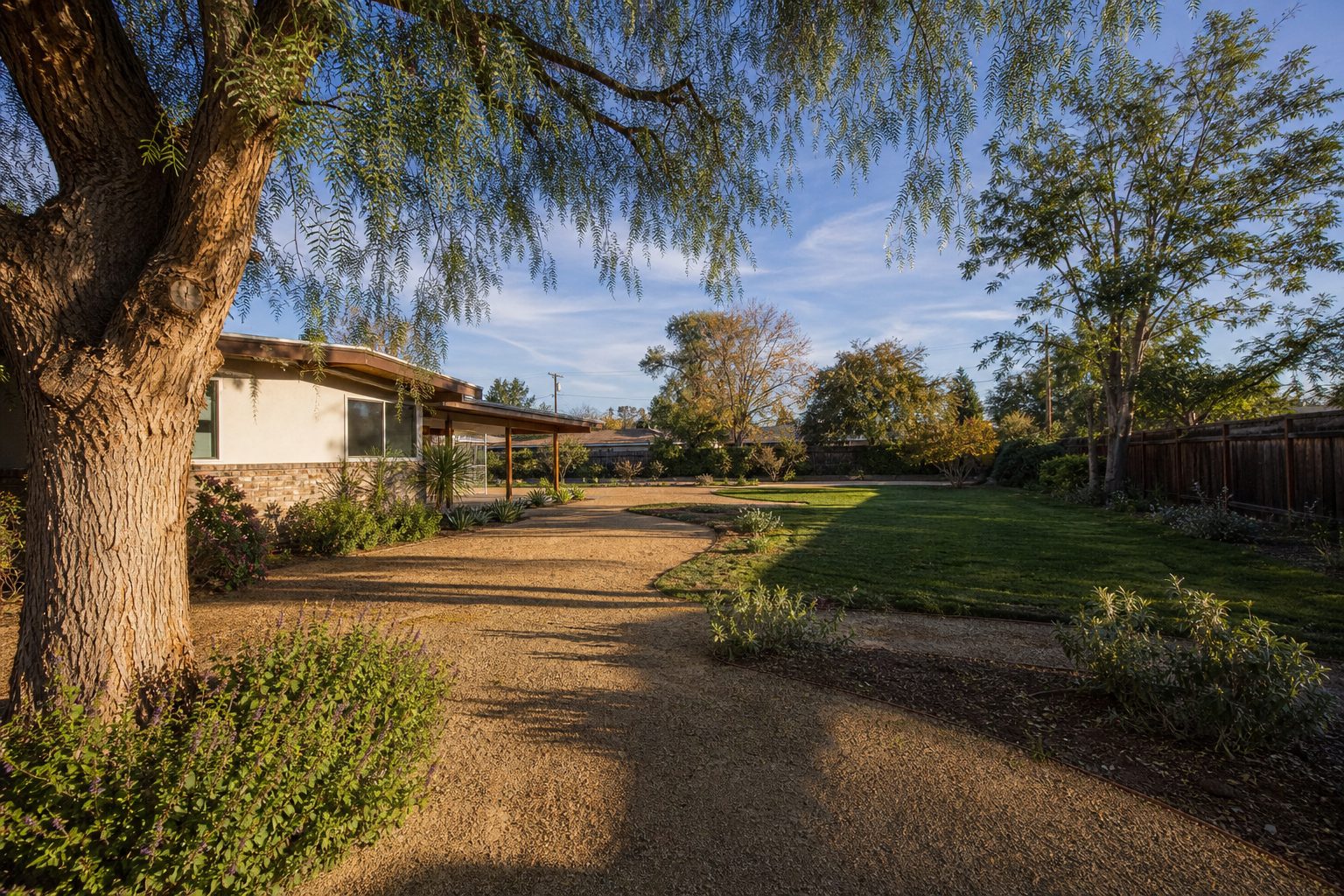
With 6 years of experience and 40 closed transactions across the San Fernando Valley, I can tell you that buyers walk into a Lake Balboa backyard on these interior blocks near Lake Balboa College Preparatory Magnet on Balboa Blvd, and the first thing they say is, “I had no idea these lots were this big.” Many Lake Balboa lots have more backyard than buyers expect, and showing that space clearly helps a buyer picture what it could become.
The key question becomes: how do you make sure they see it?
How to Present Your Lake Balboa Lot’s ADU Potential to Buyers
You do not need to build an ADU to benefit from one. But you do need to make the possibility tangible. Here is how to do that effectively.
Show the Buildable Footprint
Most mid-century ranch homes on these blocks sit toward the front of a 7,000- to 8,500-square-foot lot, leaving significant backyard depth. What I recommend is having a site survey or scaled plot plan prepared before you list. When a buyer can see in black and white that there is room for a 1,200-square-foot detached structure with 4-foot setbacks and still have usable yard space remaining, the conversation changes completely.
Include ADU Cost and Income Projections in Your Listing Materials
According to 2026 construction cost data for the San Fernando Valley, a detached ADU runs roughly $225 to $325 per square foot. Garage conversions come in lower at $120,000 to $200,000. Rental income for ADUs in the Valley ranges from $1,700 to $3,200 per month, depending on size, finishes, and whether you include in-unit laundry and private outdoor space, which can add $100 to $300 per month each.
When you put these numbers in front of a buyer, you are no longer just selling a three-bedroom ranch. You are selling a property with an income-generating second unit that could cover a significant portion of a monthly mortgage.
Reference the Pre-Approved Plans
The Los Angeles Department of Building and Safety’s ADU Standard Plan Program listed 83 plans in its April 2026 catalog, with 79 approved and 4 pending, ranging from a 200-square-foot studio to 1,200-square-foot three-bedroom units. Mentioning these in your listing materials tells buyers, “You do not have to start from scratch.” That removes one of the biggest psychological barriers.
The Build vs. Sell Decision for Lake Balboa Homeowners
This is the question I get most often from sellers on these blocks: “Should I build the ADU first, or sell the lot with the potential and let the buyer do it?”
Here is how to think about it.
When Selling With Potential (Not Building) Makes Sense
- You want to sell within the next three to six months and cannot absorb a construction timeline of six to twelve months
- You do not want to tie up $150,000 to $400,000 in construction capital
- Your lot’s layout clearly speaks for itself, especially with proper staging and marketing materials
- The buyer pool in Lake Balboa already understands ADU value, which reduces the need to prove it with a finished product
When Building Before Selling Could Pay Off
- You have the capital and timeline flexibility
- You plan to rent the ADU during the holding period, offsetting construction costs
- You want to eliminate buyer uncertainty entirely by delivering a turnkey income property
- You are comfortable navigating LADBS permitting, which now processes many applications in 21 to 60 days for pre-approved standard plans
Single-family properties in Lake Balboa are currently commanding an average sold-to-list price ratio of 104.6%, per MLS data as of mid-2026. That tells you buyers are willing to compete for the right listing. Whether that means selling with potential or selling a finished product depends on your personal timeline and financial situation.
Why Proper Positioning Changes Everything in Lake Balboa
Nearby in North Hills, I listed 9419 Haskell Ave, a 4-bed, 2-bath home with owned solar and a permitted rec room with ADU potential. That home had sat unsold for a year with another agent before I listed it. After repositioning the pricing and marketing strategy, it sold for $886,000 on an $875,000 list price with 5 offers, closing in June 2026.
The home itself did not change. The positioning did.
That is exactly what matters when you are selling a Lake Balboa property with ADU potential. The lot needs to be marketed as the asset, not an afterthought buried in the MLS remarks. My MLS listings average 17 days on market at 101% of list price, and that pace comes from the same structure and discipline I carried through service in the U.S. Army in Iraq and Kosovo: preparation, execution, and clear communication at every step.
With over 55 five star reviews across Google, Zillow and Yelp, I approach every listing the same way.
Key ADU Rules Lake Balboa Sellers Should Know in 2026
You do not need to memorize every regulation, but your buyer will ask questions. Here is what matters most for properties on these interior blocks.
- Maximum detached ADU size: 1,200 square feet, per California state law as of 2026
- Maximum junior ADU size: 500 square feet
- Setbacks: 4 feet from side and rear property lines for new construction
- Parking: State law removes the parking requirement entirely for any ADU within a half-mile walking distance of public transit, and Balboa Station on the Rapid Bus line is nearby
- Owner occupancy: Permanently removed for standard ADUs
- Two-story option: The City of Los Angeles explicitly permits detached ADUs of up to two stories and up to 1,200 square feet, which is particularly useful for maximizing backyard space on these lots
- Cost-saving tip: Stay at 750 square feet or under to owe no impact fees, and at 500 square feet or under to owe no LAUSD school fee of $5.38 per square foot above that threshold, effective from August 11, 2026
- Solar requirement: California’s energy code requires solar on newly built detached ADUs; garage and interior conversions are exempt
Three new bills took effect January 1, 2026, including AB 1154 limiting owner-occupancy conditions on junior ADUs and SB 543 adding application-processing protections. A 2026 update also added a 15-business-day window for agencies to confirm whether your application is complete; if they miss that window, your application is treated as complete.
Frequently Asked Questions
Can I sell my Lake Balboa home with ADU potential without building the ADU first?
Yes. Properties with clear space to build an ADU are already attracting more attention from buyers in the San Fernando Valley, especially those interested in rental income or multigenerational living. A well-prepared site plan and cost projections in your listing materials can communicate that potential without requiring you to build anything before listing.
How much does it cost to build an ADU in the San Fernando Valley in 2026?
According to 2026 construction cost data, a detached ADU in the San Fernando Valley averages $225 to $325 per square foot. Garage conversions run $120,000 to $200,000, and junior ADUs cost $60,000 to $100,000. Premium areas command higher rates, but Lake Balboa falls within the mid-Valley range.
What is the maximum ADU size allowed on a Lake Balboa lot?
Under current California law, a detached ADU can be up to 1,200 square feet. You can also add a junior ADU of up to 500 square feet within the existing home. The City of Los Angeles permits two-story detached ADUs within that 1,200-square-foot limit.
How much rental income can an ADU generate in Lake Balboa?
ADU rental income in the San Fernando Valley ranges from $1,700 to $3,200 per month, per 2026 rental market data. Adding in-unit laundry, private outdoor space, or dedicated parking can increase that by $100 to $300 per month each.
What are the setback requirements for an ADU on my Lake Balboa lot?
Side and rear setbacks are 4 feet for new detached ADU construction. On a typical Lake Balboa lot of 7,000 to 8,500 square feet, this still leaves substantial buildable area even after accounting for the existing home and required setbacks.
Do I need to live on the property to rent out an ADU in Los Angeles?
No. The owner-occupancy requirement for standard ADUs has been permanently removed under California state law. You can build, rent, or sell the property with a rented ADU without being required to live on site.
How long does it take to get an ADU permit in Los Angeles in 2026?
The Los Angeles Department of Building and Safety now processes many ADU applications in 21 to 60 days, particularly for pre-approved standard plans. The LADBS catalog includes 79 approved plans as of April 2026.
Are Lake Balboa homes selling quickly in 2026?
Single-family homes in Lake Balboa are spending a median of just 17 days on market, per mid-2026 MLS data, with a sold-to-list price ratio of 104.6%. Well-priced homes with clear value propositions are moving fast.
What is the median home price in Lake Balboa in 2026?
In July 2026, homes in Lake Balboa sold for a median price of $859,000. The median price per square foot in August 2026 was $525 per square foot, down about 12% year-over-year, per local market data.
Does my ADU need solar panels?
California’s energy code requires a solar panel system on any newly built, detached ADU. Garage conversions, basement conversions, and interior conversions are exempt because they classify as alterations rather than new construction. New detached units in 2026 also need battery-ready wiring, though the battery itself remains optional.
The Bottom Line
If you own a home on the interior blocks of Lake Balboa between Vanowen St and Sherman Way, near Lake Balboa College Preparatory Magnet on Balboa Blvd, your lot is likely worth more than you think, and not because of the house sitting on it. Your flat, spacious backyard is exactly the type of buildable canvas that today’s buyers are actively searching for.
Whether you decide to build before selling or let the next owner capture the ADU upside, the critical move is positioning your property correctly from day one. That is what I do for every listing. I am Seann Brown with Park Regency, a GRI-certified REALTOR and U.S. Army veteran serving the west San Fernando Valley. If you are weighing your options, call me at 818.960.3501 or visit seannhomes.com. Let’s look at your lot together and build a strategy that gets you the best possible outcome.

Leave a Reply