


If you’ve owned your Northridge home for decades, how much capital gains tax will you actually owe when you sell?
If you’re a married couple filing jointly, you can exclude up to $500,000 of your gain from taxes. Single filers can exclude $250,000. Any gain above that is taxable at both the federal and California state level, and in a market where Northridge’s median sale price sits around $1.17 million (per Redfin, as of August 2026), longtime owners frequently exceed those thresholds.
> Important: This blog is educational only and is not tax advice. Always consult a licensed CPA or tax advisor regarding your specific situation.
Why Capital Gains Tax Matters for Northridge Homeowners Right Now
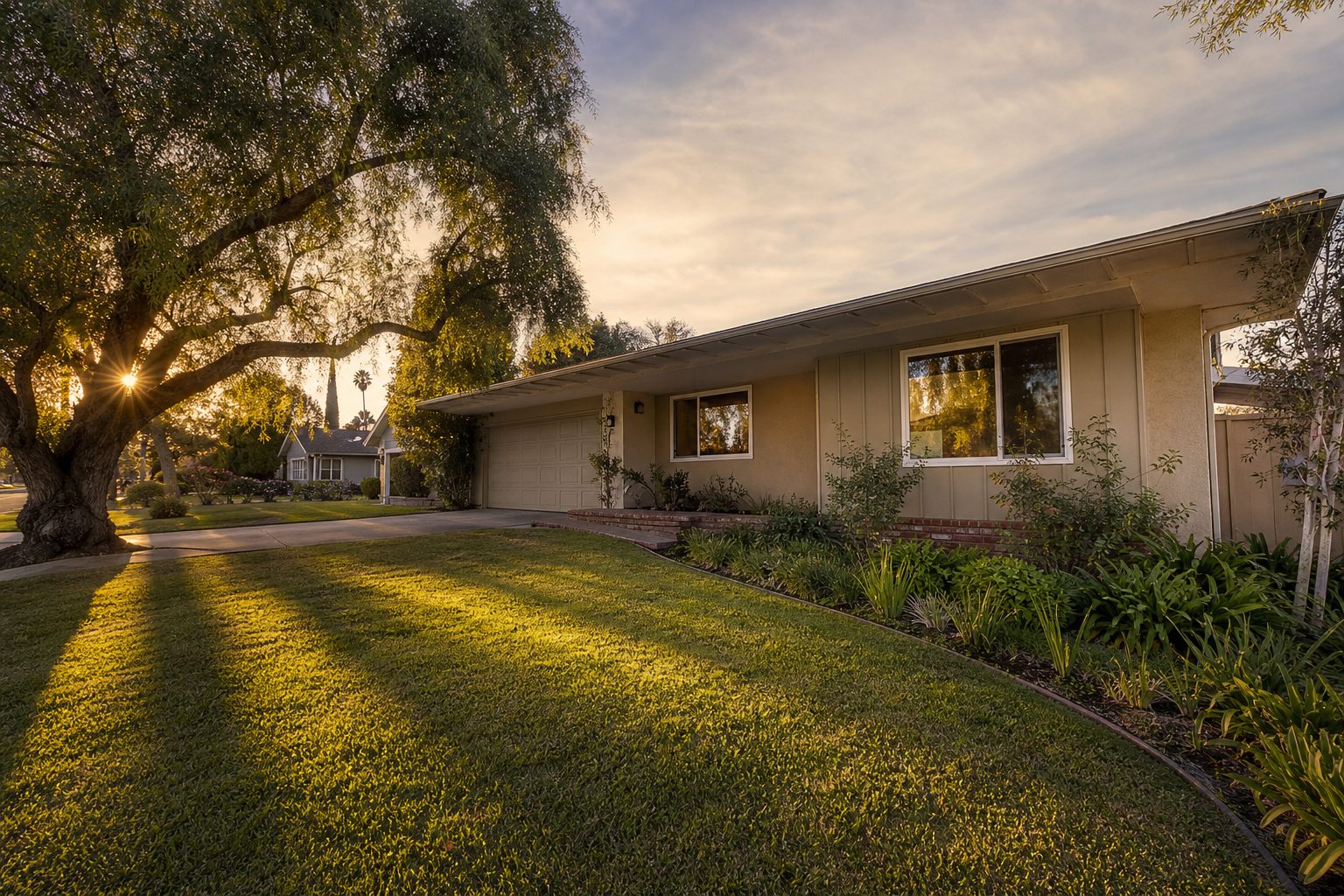
You’ve spent years, maybe decades, on one of those wide, tree-lined streets between Reseda Boulevard and Devonshire. You raised your family here. You rebuilt after the ’94 earthquake. And now your home is worth several times what you paid for it.
That’s the good news. The less comfortable reality? The IRS exclusion thresholds of $250,000 (single) and $500,000 (married filing jointly) have not been adjusted for inflation since 1997, per IRS Publication 523. Meanwhile, Northridge home values have roughly tripled over that same period. The gap between what the government lets you exclude and what you’ve actually gained keeps widening every year.
What I tell my clients is this: understanding your potential tax exposure before you list is not optional. It changes your timeline, your pricing strategy, and sometimes even how you structure the sale.
How the IRS Section 121 Exclusion Works for Northridge Sellers
Under Internal Revenue Code Section 121 (referenced in IRS Topic 701 and Publication 523), you qualify for the exclusion if you meet three tests:
- Ownership test: You owned the home for at least 24 of the 60 months before the sale
- Use test: You lived in it as your principal residence for at least 24 of those same 60 months (the months do not have to be consecutive)
- Frequency test: You have not used the exclusion on another home sale within the previous two years
For married couples claiming the full $500,000 exclusion, both spouses must meet the use test, but only one spouse needs to meet the ownership test. Neither spouse can have used the exclusion within the prior two years.
Here’s something that catches people off guard: if you’re a surviving spouse, you may still be able to claim the full $500,000 exclusion, but only if the home is sold within two years of your spouse’s death, the home was used as the primary residence by both spouses for two of the last five years, and neither spouse had used the exclusion within the prior two years.
With 6 years of experience helping homeowners across the San Fernando Valley and a GRI certification from the Graduate, REALTOR® Institute, I consistently recommend that sellers start this conversation with their CPA well before listing day. Not after.
How to Calculate Your Gain on a Northridge Home Sale
Your gain is not simply the difference between what you paid and what you sell for. It is more nuanced than that, and the details work in your favor if you’ve kept good records.
Step 1: Determine Your Amount Realized
Your amount realized equals your sale price minus your selling costs (commissions, escrow fees, title insurance, transfer taxes, and similar closing expenses).
Step 2: Calculate Your Adjusted Cost Basis
Your adjusted cost basis starts with your original purchase price and then adds capital improvements you made over the years. This is where receipts become genuinely valuable. Per the IRS, capital improvements that add value, extend useful life, or adapt your home to new uses all increase your basis. Think:
- Kitchen and bathroom remodels
- New roof or HVAC system
- Room additions or garage conversions
- Pool installation
- Seismic retrofitting (especially relevant for Northridge homes built around the median year of 1958, per Resideline data)
Routine repairs like painting, patching drywall, or fixing a leaky faucet do not count.
Step 3: Subtract Basis from Amount Realized
The result is your total gain. Then you subtract your applicable exclusion ($250,000 or $500,000). Whatever remains is your taxable capital gain.
So what does that actually look like in dollar terms for a typical Northridge owner? Let me walk through a clearly labeled hypothetical.
A Hypothetical Example for a Longtime Northridge Homeowner
This is a hypothetical scenario for illustration purposes only. Consult a licensed CPA for your actual tax situation.
Consider a married couple who purchased their Northridge home in 1992 for $280,000. Over three decades, they invested $150,000 in capital improvements: a full kitchen remodel, a new roof, HVAC replacement, and a room addition.
- Sale price: $1,200,000
- Selling costs (commissions, escrow, etc.): $72,000
- Amount realized: $1,128,000
- Original purchase price: $280,000
- Capital improvements: $150,000
- Adjusted cost basis: $430,000
- Total gain: $698,000
- Section 121 exclusion (married filing jointly): $500,000
- Taxable gain: $198,000
That $198,000 in taxable gain would then be subject to both federal and California state taxes. This is educational only, but it shows why the conversation with a CPA needs to happen early.
Federal and California Tax Rates That Apply to Northridge Home Sales
Federal Long-Term Capital Gains Rates (2026)
For most longtime Northridge homeowners, the 15% federal rate applies. Here are the 2026 thresholds per the IRS:
- 0% rate: Taxable income up to $49,450 (single) or $98,900 (married filing jointly)
- 15% rate: Taxable income up to $545,500 (single) or $613,700 (married filing jointly)
- 20% rate: Taxable income above those thresholds
Additionally, the Net Investment Income Tax (NIIT) of 3.8% may apply if your modified adjusted gross income exceeds $200,000 (single) or $250,000 (married filing jointly). The NIIT is assessed on the lesser of your net investment income or the amount by which your MAGI exceeds those thresholds.
California State Tax on Capital Gains
Here is where the tax picture gets heavier. California does not have a separate state-level exclusion for home sale gains. The state also does not offer a lower rate for capital gains. California taxes capital gains as regular income, at rates that go as high as 13.3%.
So in the hypothetical above, that $198,000 in taxable gain would be subject to both the federal capital gains rate and your California marginal income tax rate. The combined hit can be significant.
Strategies Northridge Sellers Use to Reduce Their Tax Exposure
You cannot eliminate capital gains tax through wishful thinking, but you can take steps, with professional guidance, to reduce or manage it.
- Document every capital improvement. Every dollar you add to your cost basis is a dollar subtracted from your taxable gain. Dig through those files, find receipts, and bring them to your CPA.
- Time the sale strategically. Your other income in the year of sale affects which tax bracket your gain falls into. A CPA can help you evaluate whether selling in one tax year versus another makes a material difference.
- Consider installment sales. In some cases, structuring the sale to spread payments over multiple years can shift taxable gain across tax periods.
- 1031 exchange (if applicable). If you convert your Northridge home to an investment property and meet specific IRS requirements before selling, a 1031 exchange may defer the gain. This is complex, and the rules are strict, so professional guidance is essential.
- Surviving spouse timing. As noted above, the window for claiming the full $500,000 exclusion after a spouse’s passing is limited to two years.
Having closed over 40 transactions across the San Fernando Valley, with a 5.0-star Google rating across 31 client reviews, I coordinate closely with my clients’ CPAs and financial advisors. Selling your Northridge home is not just a real estate transaction. It is a financial event, and it deserves that level of preparation.
What Northridge’s Current Market Means for Your Gain Calculation
Where your home sits within Northridge’s price range matters more than you might think. As of October 2026, the median sold price in Northridge is $1,060,000, measured across 285 closed sales over the prior six months (per Resideline data). CRMLS data through September 2026 shows 95 active listings at a median asking price of $1,135,000, with homes trading at exactly 100% of original asking price after a median of 21 days on market.
The middle half of Northridge sales closed between $785,301 and $1,375,000 (per Resideline, October 2026). That range means your potential taxable gain could vary by hundreds of thousands of dollars depending on your home’s specific location, condition, and lot size. The median Northridge lot measures 10,046 square feet (per Resideline), placing it 5th of 22 San Fernando Valley sub-markets on land area, and that generous lot size is one reason values here have climbed so substantially.
If you’re considering a move up to Woodland Hills, where the median sold price reached $1,201,100 across 526 closings as of mid-2026 (per Resideline), or Encino at $2,440,000 median closed price as of April 2026 (per CRMLS data), the net proceeds after taxes become the real number you need to plan around, not the sale price itself.
Frequently Asked Questions
How much gain can I exclude when selling my Northridge home?
Per IRS Publication 523, you can exclude up to $250,000 of gain if you file as a single taxpayer, or up to $500,000 if you are married filing jointly. You must have owned and used the home as your primary residence for at least two of the five years before the sale, and you cannot have used the exclusion within the prior two years.
Does California tax capital gains from a home sale?
Yes. California does not offer a separate state-level exclusion for home sale gains. Any gain above your federal Section 121 exclusion is taxed as ordinary income at California state rates, which go up to 13.3%. This is a significant consideration for longtime Northridge homeowners.
What counts as a capital improvement for tax purposes?
Capital improvements that add value, extend useful life, or adapt your home to new uses increase your cost basis and reduce your taxable gain per IRS guidelines. Examples include kitchen remodels, new roofs, HVAC systems, room additions, and seismic retrofitting. Routine repairs like painting or fixing leaks do not qualify.
How do I calculate my gain on a Northridge home sale?
Your gain equals your amount realized (sale price minus selling costs) minus your adjusted cost basis (original purchase price plus qualifying capital improvements). The Section 121 exclusion then reduces the taxable portion. Keep records of all improvements and closing costs.
What is the Net Investment Income Tax and does it apply to home sales?
The NIIT is a 3.8% surtax on investment income that applies when your modified adjusted gross income exceeds $200,000 (single) or $250,000 (married filing jointly). Capital gains from a home sale above the Section 121 exclusion can trigger this additional tax. Consult your CPA for specifics.
Can a surviving spouse get the full $500,000 exclusion in Northridge?
Yes, under certain conditions. The home must be sold within two years of the spouse’s death, both spouses must have used the home as their primary residence for two of the last five years, and neither spouse can have used the exclusion within the prior two years. This is a narrow but valuable window.
Do selling costs reduce my taxable gain?
Yes. Commissions, escrow fees, title insurance, and other legitimate selling costs are subtracted from the sale price to determine your amount realized. This reduces your total gain before the exclusion is applied.
What are the 2026 federal capital gains tax rates?
For 2026, the federal long-term capital gains rates are 0% for taxable income up to $49,450 (single) or $98,900 (married filing jointly), 15% up to $545,500 (single) or $613,700 (married filing jointly), and 20% above those thresholds per IRS guidelines.
Should I consult a CPA before selling my Northridge home?
Absolutely. Capital gains tax calculations depend on your filing status, total income, cost basis documentation, and state tax obligations. A licensed CPA can help you identify every deduction, time the sale strategically, and ensure you keep as much of your equity as possible.
How does Northridge’s median home price affect my capital gains?
With Northridge’s median sale price around $1.17 million (per Redfin, as of August 2026), longtime owners who purchased decades ago frequently have gains that exceed the $250,000 or $500,000 exclusion thresholds. The higher your home’s value relative to your original purchase price, the more important tax planning becomes.
The Bottom Line
If you’ve owned your Northridge home for 20 or 30 years, you’re sitting on significant equity. That’s a position of strength. But selling without understanding your capital gains exposure can mean leaving tens of thousands of dollars on the table, or worse, being surprised at tax time.
Start by gathering your improvement receipts, contact a licensed CPA, and get a clear picture of your adjusted cost basis before you ever put a sign in the yard. As a U.S. Army veteran, GRI-certified REALTOR®, and listing specialist ranked number 8 of over 150 agents at Park Regency Realty in 2025, I help Northridge homeowners plan the financial side of their sale alongside the marketing strategy. If you’d like to talk through your situation, call me at 818-960-3501 or visit my office at 9275 Corbin Ave in Northridge. I’m Seann Brown with Park Regency, and I’d rather you have the full picture before making a move.
*This blog is for educational purposes only and does not constitute tax, legal, or financial advice. Please consult a licensed CPA or tax advisor for guidance specific to your situation.*

Leave a Reply